

Fire Pit or Outdoor Fireplace? Choosing the Right One for Your Topsail Home
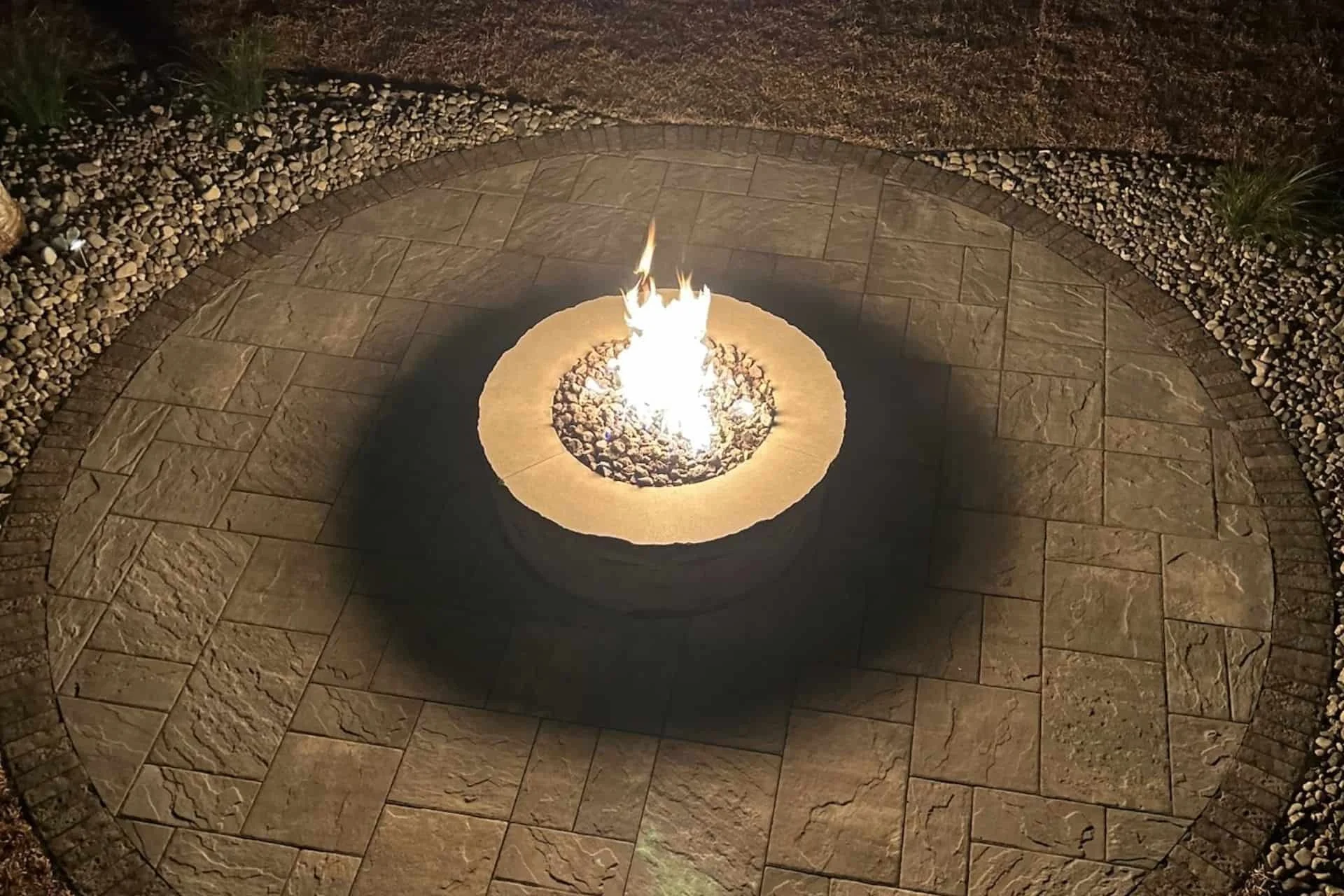
If you're trying to decide between a fire pit and an outdoor fireplace, the good news is there's no wrong answer, just a right one for how you actually use your yard. A fire pit tends to be the better fit when you want a social focal point people can gather around from every side, flexibility in where you put it, and an option that works with a wider range of budgets. An outdoor fireplace makes more sense when you're after a permanent architectural statement, directional heat aimed at a specific seating area, and a feature that anchors a more formal outdoor living space.
For homeowners in Surf City, Hampstead, and Topsail Beach, it usually comes down to how you spend time outside, how many people you typically gather with, and how the feature fits the rest of your landscape. Both are great investments. They just do different jobs.
What’s the Difference Between a Fire Pit and an Outdoor Fireplace?
The most important distinction is how heat and flame are distributed. A fire pit is open on all sides, which means guests can gather around it from any direction, and the warmth radiates outward in a 360-degree pattern. It creates an informal, convivial atmosphere and works especially well for larger groups or layouts where seating wraps around a central point.
An outdoor fireplace is enclosed on three sides with a firebox and chimney, much like an indoor fireplace. Heat and visual focus are directed outward from the front, making it ideal for a defined seating wall or a covered outdoor room where guests face the fire from one direction. It also manages smoke more effectively since the chimney draws it upward rather than letting it drift toward whoever happens to be sitting downwind. Both have their place; the question is which one matches the way you actually want to live in your outdoor space.
How Does Each Option Fit Into a Coastal North Carolina Yard?
The outdoor climate in Surf City, Topsail Beach, and Hampstead creates some specific considerations that homeowners further inland don’t have to think about. Salt air, humidity, and occasional high wind events all affect material choices and structural decisions for any permanent outdoor feature.
Fire pits in coastal environments do well in cast concrete, natural stone, or powder-coated steel with rust-resistant finishes. Gas and propane fire pits tend to hold up better than wood-burning ones in humid conditions because they eliminate the need to store firewood, which can mold quickly in the coastal moisture. They also allow for easy ignition and flame control without the smoke-management challenges that coastal winds can create with wood fires.
Outdoor fireplaces are more significant structural investments and need to be built with materials suited to the coastal environment. Natural stone, stucco over block, and brick with proper sealants are all solid choices here. The chimney height and cap design also matter in a location with variable wind patterns, since a poorly designed chimney can draft smoke back toward the seating area. Working with an experienced landscape contractor who knows the local conditions is essential for getting that right.
Which One Is Better for Entertaining?
This depends almost entirely on the size of your typical gathering. Fire pits have become a centerpiece for at-home entertainment, providing a versatile and inviting space for social gatherings, and that reputation is well-earned. When you have a dozen people in the backyard on a summer evening in Topsail Beach, a fire pit lets everyone pull up a chair and be part of the circle. No one is stuck off to the side or behind the group.
An outdoor fireplace, by contrast, is better suited to intimate gatherings of four to eight people in a defined seating area. Think of it as the outdoor equivalent of a living room with a hearth. It creates a more formal, polished atmosphere that works beautifully for a covered outdoor room, a patio with a pergola overhead, or a space designed around a single seating arrangement facing the fire.
If you do a lot of large backyard entertaining with flexible, casual layouts, the fire pit wins on pure practicality. If your outdoor space is designed around a specific seating area and you want a dramatic architectural anchor, the fireplace is the better fit.
What About the Investment and ROI?
Cost is one of the clearest differentiators between the two options. A well-built custom fire pit, designed and installed as part of a professional landscape project, typically runs significantly less than a full outdoor fireplace build. Fire pits can deliver around 80% ROI because of their appeal and relatively lower cost of installation compared to more elaborate permanent structures.
Outdoor fireplaces are larger investments, both in material costs and in the construction complexity involved. They require a foundation, a firebox, and a properly engineered chimney, and in many cases, they tie into a broader hardscape design, including a surrounding patio, built-in seating, or an outdoor kitchen. The total project scope tends to be more substantial, but so is the visual and functional impact on the space.
Both features add meaningful value to a coastal North Carolina property. Homes with compelling outdoor living spaces, especially those with fire features, tend to generate stronger buyer interest and faster sales. The decision between the two should be driven by what fits your design and how you use the space, not just by upfront cost.
Can You Have Both?
Of course! And on larger properties in the Topsail area, it isn’t uncommon to see a landscape design that incorporates both a fire pit and an outdoor fireplace in separate zones. A fire pit might anchor a lawn-level gathering area while an outdoor fireplace defines a covered dining or living zone closer to the home. The two features serve different purposes and different moments in how the yard gets used.
That kind of multi-zone design works best when it is planned from the beginning rather than added piecemeal. Sightlines, hardscape flow, lighting, and seating placement all need to account for both features to feel cohesive rather than crowded. This is exactly the kind of project where working with a landscape designer from the start pays off in both the end result and the overall project efficiency.
What Should You Think About Before You Decide
A few questions are worth sitting with before you commit to either option. How many people do you typically have over? Where does your current outdoor seating naturally face? Is your yard more open and informal or structured around a specific outdoor room? Do you have an existing covered structure like a pergola or pavilion that the fire feature would live under? And what is your timeline? Are you looking for something that can be installed this season or planning a larger project for next spring?
Answering those honestly will point you clearly toward one or the other. And if you are still not sure after thinking it through, that is usually a sign that a design conversation would be helpful before any decisions get made.
Design Your Dream Yard With Topsail Outdoor Living
At Topsail Outdoor Living, we design and build custom outdoor spaces throughout Surf City, Hampstead, and Topsail Beach, and fire features are one of our specialties. Whether you are leaning toward a fire pit, an outdoor fireplace, or aren’t quite sure yet, we would love to walk through the options with you and help you figure out what really makes sense for your space. Reach out to our team and let's start the conversation.
Frequently Asked Questions
-
A fire pit is the better choice when you want a social focal point that works from multiple sides, offers flexible placement, and fits a wider range of budgets. An outdoor fireplace is better when you want a permanent architectural statement, directional heat aimed at a specific seating area, and a feature that anchors a formal outdoor space. The right answer usually comes down to how you use your outdoor space, how many people you typically gather with, and how the feature fits your overall landscape design. Both are excellent investments that serve different purposes.
-
The key difference is how heat and flame are distributed. A fire pit is open on all sides, so guests can gather from any direction and warmth radiates outward in a 360-degree pattern, creating an informal, convivial atmosphere ideal for larger groups. An outdoor fireplace is enclosed on three sides with a firebox and chimney, directing heat and visual focus outward from the front. It suits a defined seating area or covered outdoor room and manages smoke better, since the chimney draws it upward rather than toward whoever is downwind.
-
It depends on the size of your typical gathering. A fire pit is better for large, casual entertaining because everyone can pull up a chair and be part of the circle, with no one stuck off to the side. An outdoor fireplace suits more intimate gatherings of roughly four to eight people in a defined seating area, functioning like an outdoor living room with a hearth. If you host big, flexible backyard gatherings, the fire pit wins on practicality; if your space is built around a specific seating arrangement, the fireplace fits better.
-
Cost is one of the clearest differentiators. A custom fire pit installed as part of a professional landscape project typically costs significantly less than a full outdoor fireplace build and can deliver a strong ROI thanks to its appeal and lower installation cost. Outdoor fireplaces are larger investments in both materials and construction complexity, requiring a foundation, firebox, and engineered chimney, often tied into a broader hardscape design. Both add meaningful value to a coastal property, so the decision should be driven by how you use the space, not upfront cost alone.
-
Both can perform well in a coastal environment with the right materials. Fire pits do well in cast concrete, natural stone, or powder-coated steel with rust-resistant finishes, and gas or propane models tend to hold up better than wood-burning ones since they avoid storing firewood that can mold in coastal moisture. Outdoor fireplaces should be built from natural stone, stucco over block, or sealed brick, with careful attention to chimney height and cap design, given variable coastal winds. Working with a contractor who knows local conditions is essential.