
What's the Difference Between Hardscape and Softscape and Why Does Your Yard Need Both?
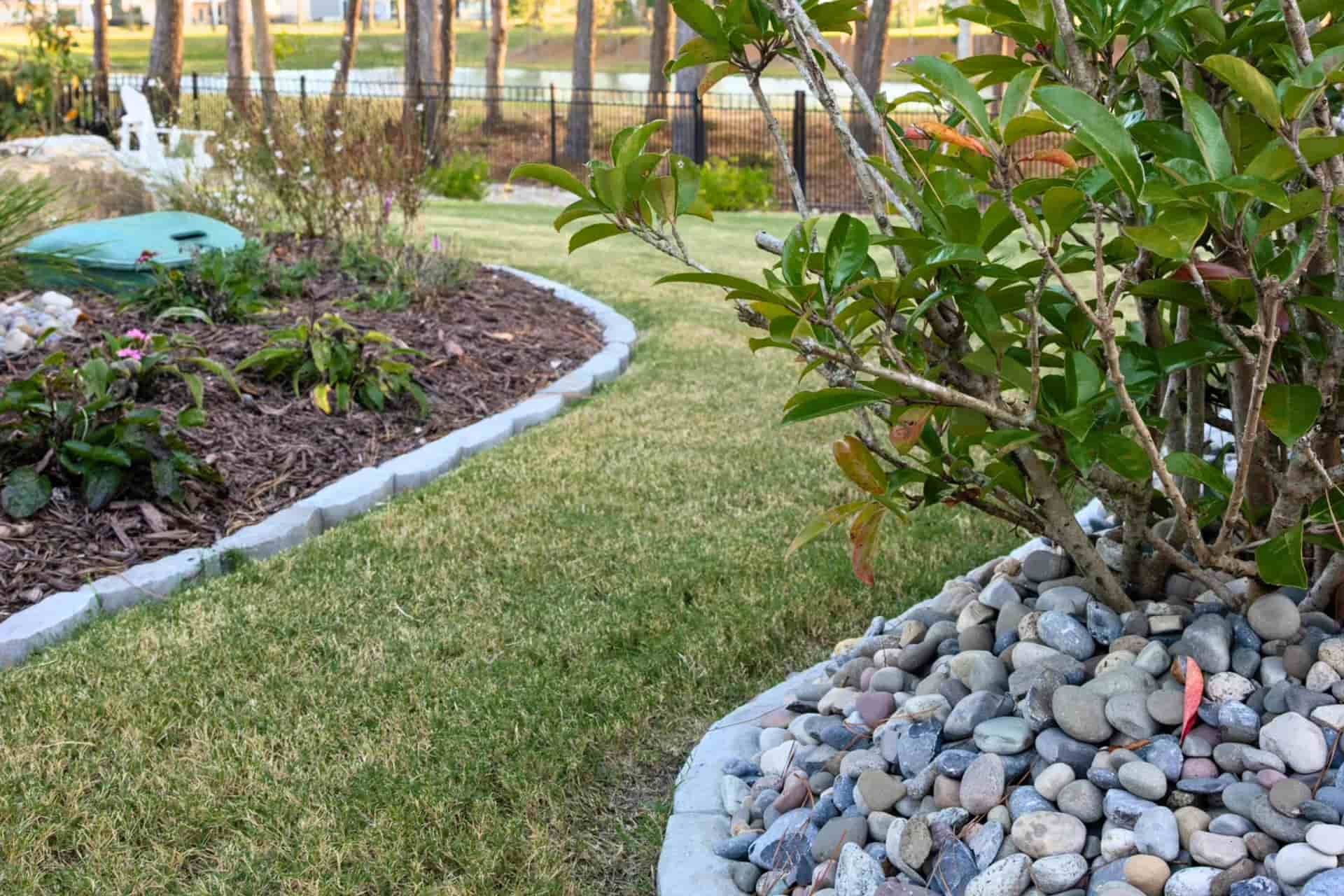
Hardscape is everything in your yard that isn't alive, like patios, walkways, retaining walls, and fire pits, while softscape is things like your lawn, trees, flower beds, and plantings. Neither one works well on its own. Think of your yard as having two halves that need each other. A yard with too much hardscape can start to feel a little cold, almost like a parking lot. A yard with too much softscape can feel wild and unfinished, without anywhere to sit and enjoy it. We think about this balance on every single project we take on, and it's usually the first thing we talk through with homeowners here on Topsail Island.
If you've been staring at your Topsail, Surf City, or Hampstead backyard trying to figure out why it doesn't feel quite right, there's a decent chance the answer comes down to this balance being off in one direction or the other.
What Exactly Counts as Hardscape?
Hardscape covers all the non-living, structural pieces of your outdoor space. Patios, walkways, driveways, retaining walls, pergolas, decks, fire pits, and outdoor kitchens all fall into this category. These are the elements that give a yard its shape and its function. A patio creates a place to put furniture and gather people. A walkway tells guests where to go without you having to point. A retaining wall holds a slope in place so the rest of your landscape doesn't wash away the first time it storms.
On Topsail Island specifically, hardscape also has to hold up to conditions that inland yards never deal with. Salt air, humidity, and sandy soil all put extra wear on materials, which is why we lean on natural stone, quality pavers, and properly sealed masonry for anything permanent we're building here.
What Exactly Counts as Softscape?
Softscape is the living side of the equation: your lawn, trees, shrubs, perennials, groundcovers, and seasonal color. This is what most people picture when they think of landscaping design, and it's what gives a property warmth and texture that hardscape alone can't provide. A stone patio surrounded by nothing but mulch looks stark. That same patio framed by ornamental grasses, flowering shrubs, and a few well-placed trees suddenly feels like a finished space.
Softscape also does real work beyond looking beautiful. Plants provide shade that keeps hardscape surfaces from turning into a griddle in July, and root systems help stabilize soil and manage water in a way that pavement simply can't.
Why Does the Balance Between the Two Matter?
A yard that leans too far toward hardscape can end up feeling sterile, hot, and expensive to have installed without delivering much return in how the space feels to be in. A yard that leans too far toward softscape can become high maintenance fast, with no defined areas to sit, entertain, or move through comfortably. The sweet spot is somewhere in between, and where exactly that spot lands depends on how you use your yard, how big your lot is, and what your maintenance tolerance looks like.
This isn't just a design opinion either. According to a joint NAR (National Association of Realtors) and NALP report, standard lawn care service had the highest cost recovery of any outdoor project at 217 percent, followed by landscape maintenance at 104 percent and an overall landscape upgrade at 100 percent. That data point alone makes a strong case for why softscape can't be an afterthought bolted onto a hardscape-heavy design. The everyday, living parts of your yard carry real weight, both in how much you enjoy the space and in what it's worth if you ever sell.
How Does Too Much Hardscape Affect a Coastal Property?
This is where Topsail Island yards need a little extra thought compared to yards further inland. Our soil here is sandy and drains fast on its own, but once you cover a big chunk of it in patio, driveway, and walkway, rain has nowhere left to go except sideways. According to Coastal Review, a study out of UNC Wilmington's Center for Marine Sciences found that replacing impervious pavement with pervious pavement at a Wrightsville Beach site cut stormwater runoff by 62 percent and cut nitrogen pollution reaching the water by 87 percent. That's the same sandy coastal soil we work with here on Topsail Island, and it's a good example of how much of a difference the ratio of paved to planted area makes.
Salt air and humidity add another layer to the equation too. Too much paved surface with too little planting means more heat radiating back up in the summer and less of that natural buffer plants provide against wind and salt spray coming off the water. Keeping enough softscape mixed in helps your yard handle what coastal weather throws at it, rather than just looking good on a dry, sunny day.
How Do You Balance Hardscape and Softscape?
There's no single formula that works for every yard, since lot size, how you entertain, and whether you're working around a pool all change the math. That said, most residential coastal properties land somewhere in the range of 55 to 65 percent softscape and 35 to 45 percent hardscape, with entertaining-heavy spaces skewing a bit more toward hardscape and quieter, garden-style yards skewing more toward softscape. The right split for your property comes down to a conversation about how you plan to live outside, not a rule pulled off the internet.
Ready to Find the Right Balance for Your Yard?
At Topsail Outdoor Living, getting this balance right is really what we love doing. Since 2012, we've helped homeowners across Topsail Island, Surf City, Hampstead, Holly Ridge, and Sneads Ferry turn yards into places they want to spend time, whether that means adding a patio, softening up a bare lot with the right plantings, or reworking a space where the mix just feels off. If your yard is leaning too far one way or the other, we'd love to walk it with you and talk through what would make the biggest difference. Schedule a consultation and let's figure out the right balance for your space.
Frequently Asked Questions
-
A deck is hardscape. Even though it's often built from wood, it's a non-living structural element, so it falls into the same category as patios, walkways, and retaining walls.
-
Yes. A yard that's almost entirely lawn and planting beds with no defined patio, walkway, or seating area can end up feeling shapeless and become harder to use for entertaining or daily life.
-
It can, especially with features like patios and outdoor kitchens, but the return tends to be more modest than what basic softscape maintenance delivers. A thoughtful mix of both tends to perform better than leaning heavily into one or the other.
-
If your yard feels either stark and hot with nowhere soft to look, or overgrown and hard to move through with nowhere defined to sit, that's usually a sign the balance needs adjusting.
-
Often, yes. Salt air, sandy soil, and North Carolina's coastal stormwater rules all factor into material choices and how much impervious surface makes sense on a barrier island property compared to one further inland.